

Risk Personalisation in Digital Consent
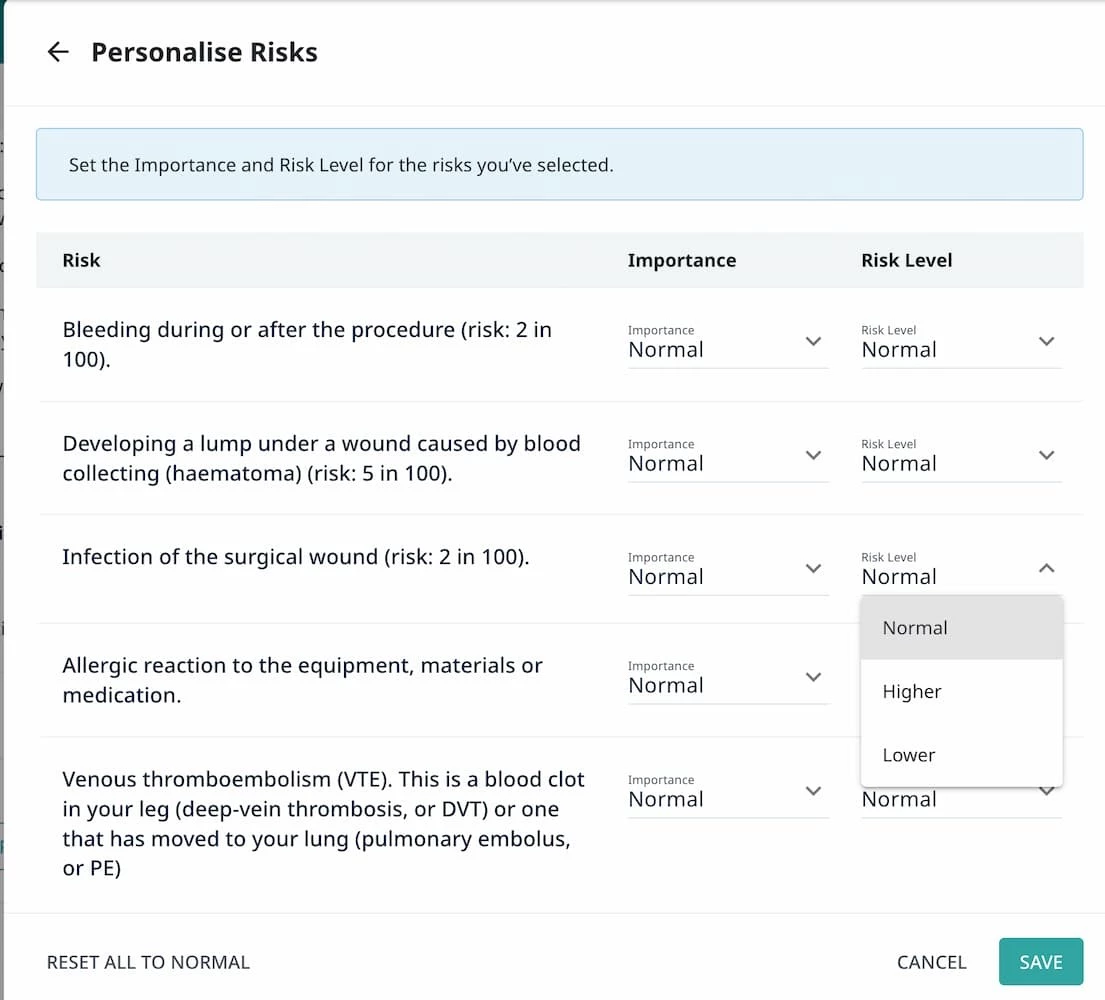
Risk Personalisation helps clinicians explain how risks may apply to a particular patient, for the proposed medical procedure.
Standard consent information includes published risks and complication rates based on clinical evidence. However, a risk may be more or less likely for one patient than another. It may also be especially important to a patient because of their work, lifestyle or personal circumstances.
How it works
When creating a consent form, a clinician can:
- Mark a risk as higher or lower for the patient.
- Mark a risk as especially important to the patient.
- Add a note explaining why the risk has been highlighted.
- Add another risk if it is relevant to the patient but is not already listed.
The published risk information remains visible. The personalised information adds context and helps the patient understand how the risks may apply to them.
What the patient sees
Personalised risks are shown during the consent journey and on the completed consent form. Clear labels show which risks have been highlighted, and the clinician’s explanation appears alongside them.
Patients can review this information on a desktop computer, tablet or mobile phone.
Supporting informed consent
Risk Personalisation helps clinicians focus the consent discussion on the risks that matter most to each patient. It also provides a clear record of the information discussed.
It does not replace clinical judgement. Clinicians should review the full consent information and make sure it is suitable for the patient. A reason should be recorded whenever a risk is personalised, so the patient understands why it has been highlighted.